
Luther’s view on good journalism
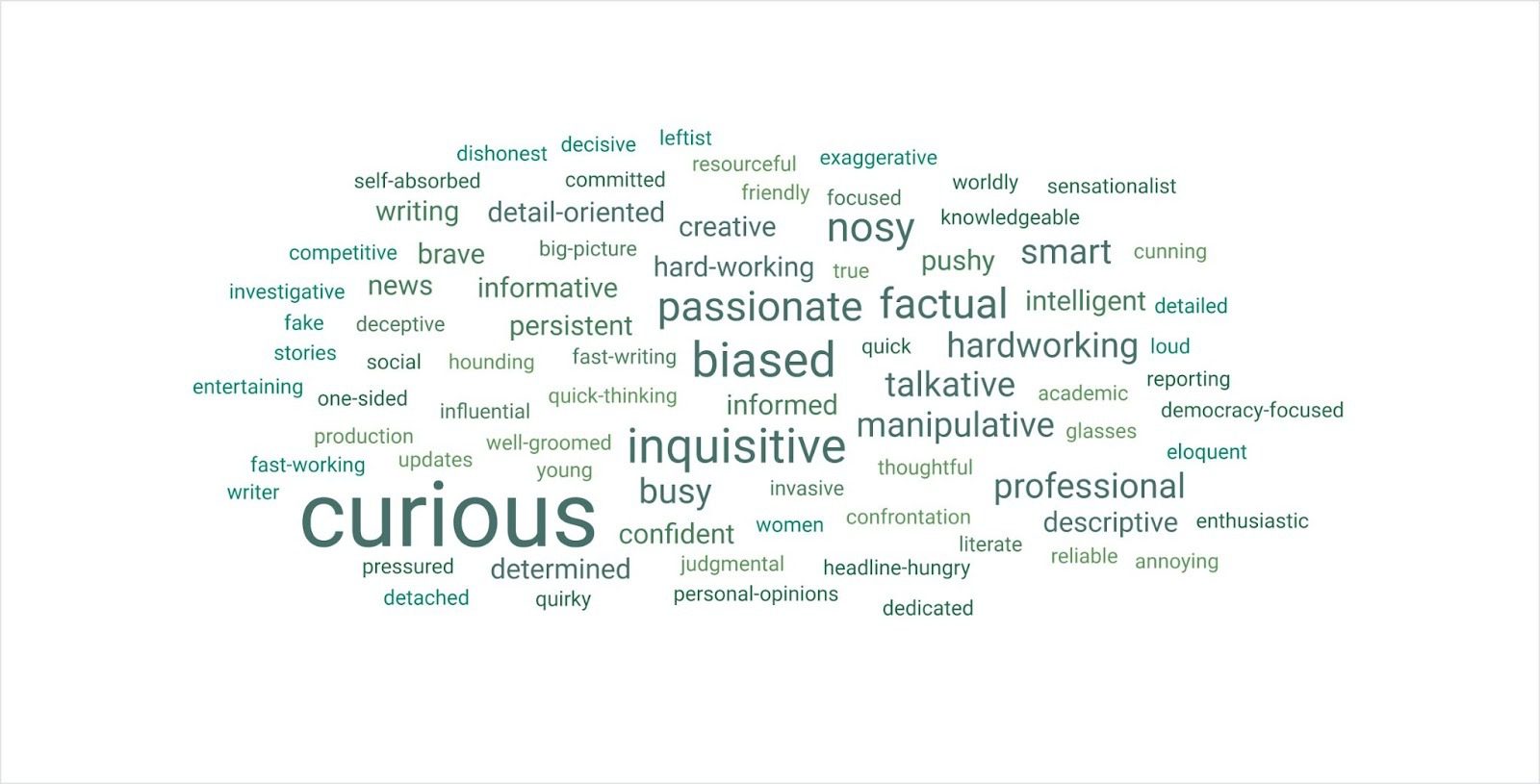
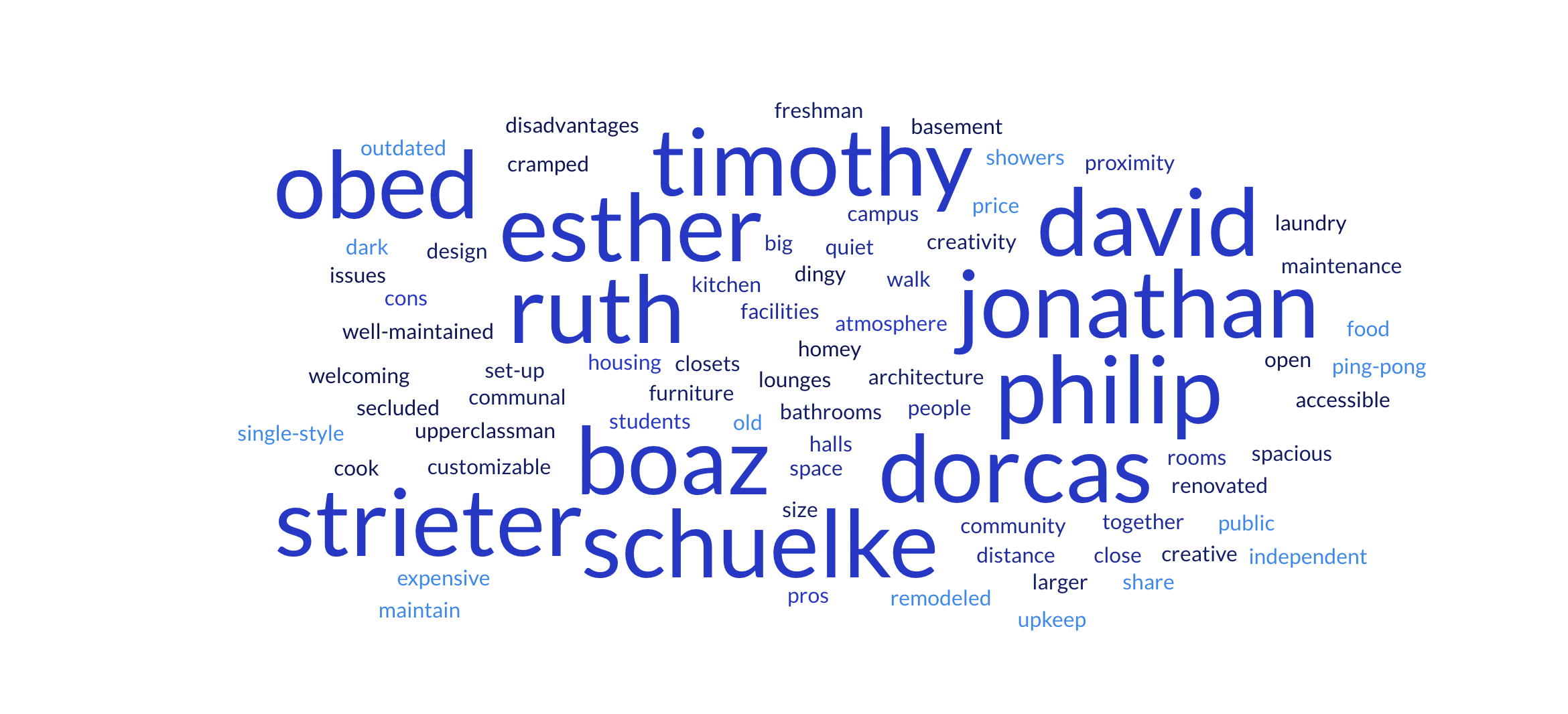
A word cloud that represents the adjectives that 43 survey respondents used to describe journalists. Larger words correspond to more frequent entries.
Image credit: Nora Betts
By Nora Betts
Managing Editor
This story is featured in the January print edition of the Sower newspaper.
When I was home over break, I told a woman at church that I will be graduating with a journalism degree in May. I could predict her response before she even said it: “Oh, good! We need good journalists.”
What is a good journalist, anyway? This question has been important to me over my entire college career, working as a Sower reporter and now as managing editor. But it is especially important as I plan to enter the journalism and communications field in a few short months!
My senior capstone project last semester explored the definition of a good journalist and related it back to my Christian faith. I surveyed 43 Concordia students about their perceptions of journalism, analyzed many scholarly sources, and applied what I learned to Martin Luther’s explanation of the Eighth Commandment: “You shall not bear false witness against your neighbor.”
My first task was understanding how Concordia students perceive journalists. I asked survey respondents to tell me what adjectives come to mind when they think of a journalist, and the responses varied from positive to negative, with descriptors like “curious,” “biased,” “inquisitive” and “nosy” topping the chart.
I also found some major concerns about journalism from Concordia students, specifically concerns about bias. Almost 77 percent of my respondents believed that journalism is biased, and another 16.3 percent gave a neutral response. Many students also said that their distrust makes them want to “fact-check” the news they read by looking at multiple sources or finding the original source of information.
Nevertheless, my peers largely believed that journalism is important to society. It seems like journalism can be improved. But how? The answer lies in a practical understanding of the Eighth Commandment.
The Commandment “You shall not bear false witness against your neighbor” is important for all Christians, but especially a Christian journalist. Martin Luther writes in the Small Catechism: “What does this mean? We should fear and love God so that we may not deceitfully belie, betray, slander, or defame our neighbor, but defend him, speak well of him, and put the best construction on everything.”
At first glance, it seems like “putting the best construction on everything” means sugarcoating tragedies, watering down the truth, or making all sides appear equally right. All of those things are misconceptions of the Eighth Commandment and the marks of a bad journalist.
A good journalist puts the best construction on everything by finding the truth to the best of their abilities and reporting accurately and tactfully, even if things are unsavory. It means reporting abuses of power by public figures, as Luther writes in his Large Catechism explanation: “Where the sin is public, the rebuke also must be public, that everyone may learn to guard against it.” However, it does not mean reporting the misdeeds of random private citizens, as Luther states, “We should never deprive anyone of his honor or good name unless it is first taken away from him publicly.”
I work to be a good journalist by loving my neighbors as Christ commands. I have a vocational responsibility to report honestly and accurately for the sake of the public.
So, I agree with that woman at church. Yes, we need good journalists! We need journalists who are virtuous, disciplined, and abide by ethical standards. But, more importantly, we need Christian journalists who understand their ultimate purpose as children of God and servants of their neighbors.