
Concordia students serve in Tanzania on mission education trip
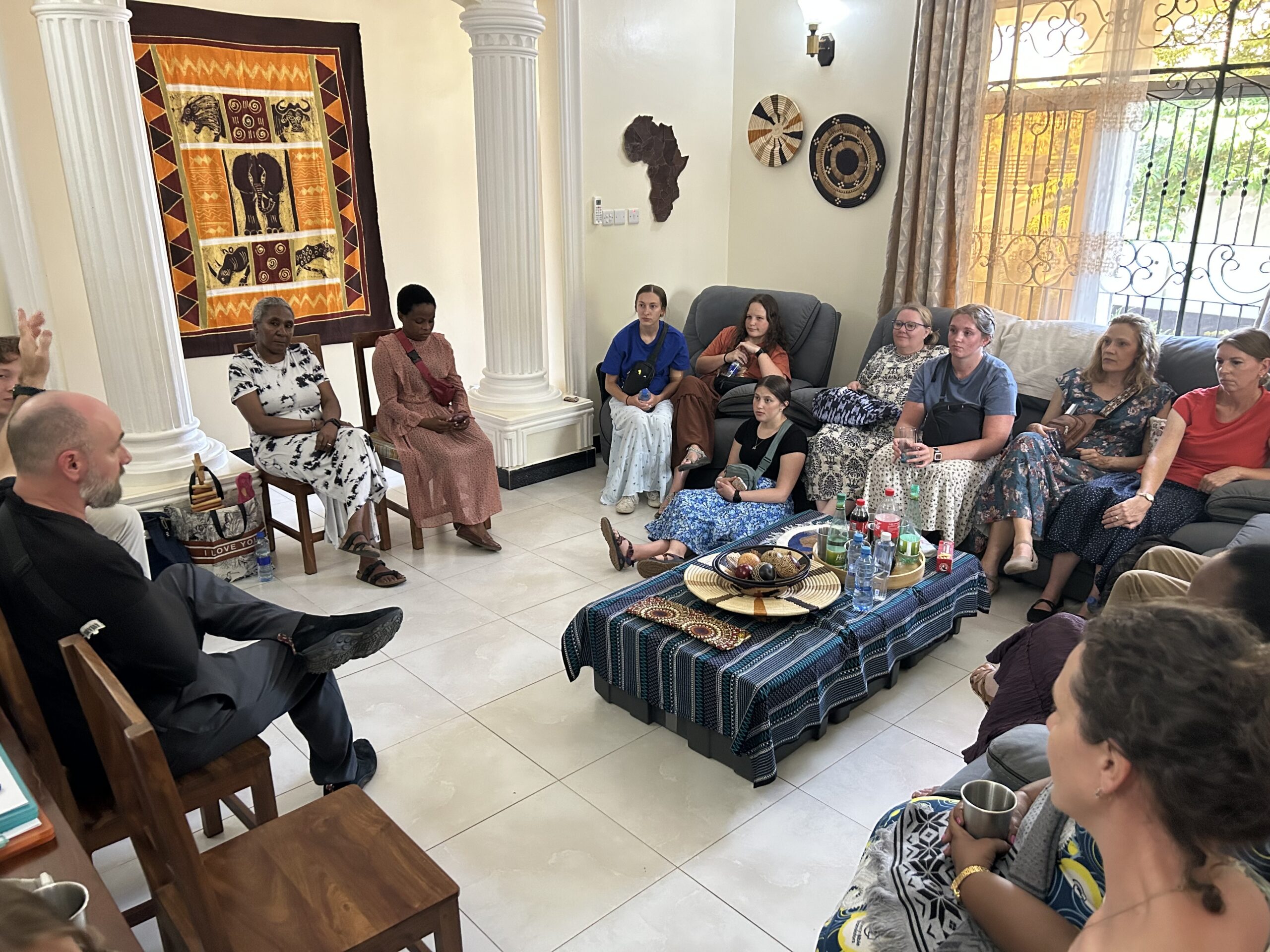
Students learn about missions in Tanzania.
Photo credit: Caylen McCoy
By Mi-Ree Zwick
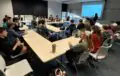
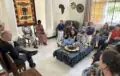
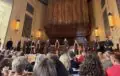
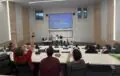
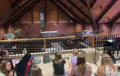
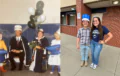
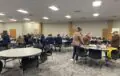
Concordia professors and church work students learned about the importance of missions on a trip to Tanzania that included visits to seminaries, schools and health centers.
The mission education trip to Tanzania is a part of a sequence of trips in which students shadow missionaries. Trip coordinator Amy Hubach contacts international missions to organize trips that are especially for future church workers.
Hubach, assistant professor of education, led the trip to Tanzania in May with Dr. Shanna Opfer, director of the elementary education program. Participating students were primarily education majors or in the Director of Christian Education program.
“Ministry looks different in different cultures, so we have to keep our eyes and our minds open to how God works,” Hubach said.
Tanzania is home to one of the fastest growing Lutheran church bodies in the world. Concordia students witnessed how the Holy Spirit worked and continues to work in Tanzania. The group stayed at the Shinyanga Seminary, where pastors and church workers are trained. The seminary opened in 2024 to handle the growth of the Lutheran Church-Missouri Synod in Tanzania.
The group also visited a cathedral, a health center affiliated with the LCMS and multiple schools, ranging from elementary to high school. They also visited a campus with a high number of people with albinism.
“In their culture, many people with albinism are not schooled, are hidden, or are unsafe because of the way people treat them,” Opfer said.
Education major Amy Crow said the treatment of people with albinism can be harsh at best and cruel at worst. Opfer said that people with albinism often are kidnapped, mutilated and murdered. If the family allowed a child with albinism to grow up, it was seen as a curse on the family.
Science explains albinism as a genetic mutation, but this is not common knowledge in Tanzania. The Lutheran Church in Tanzania is actively educating citizens about the true cause of albinism.
Tanzania overall has a low education enrollment rate and low literacy competency, according to data from the Global Economy and the Education Policy and Data Center.
In urban areas, there are higher literacy rates and more success with education. Rural communities do not have the same access to education. Homes and communities often lack technology. Electricity, glass windows and vehicles are not readily available. Most people living in rural areas go to a community church.
Opfer said people in Tanzania are driven by relationships and community and highly influenced by stories. Because of this culture, door-to-door evangelism can be very effective.
The group accompanied pastors and missionaries on one of these occasions, splitting into multiple groups. People were told the story of Jesus, creation, and the death and resurrection in less than five minutes. Baptism was offered. Hubach said that her group alone baptized about 38 people in one hour.
Pre-seminary student Caylen McCoy said that the missionaries showed what their lifestyle is like and how they live in a completely different culture.
“They were good at being effective ministers, managing resources, managing people, and filling in at tons of different congregations over a huge geographical area,” McCoy said.
Missionaries are supported by the Church, with homes, education for their children and cars. While missionary work is not the most financially fulfilling work, it is spiritually fulfilling.
“The missionaries have the resources they need in order to do the work they’re doing,” Crow said.
Concordia offers more opportunities to experience mission work and to experience what the church is doing around the world. One place to start is wp.cune.edu/global/mission-service/.