

Concordia tries to limit latex on campus for student allergy
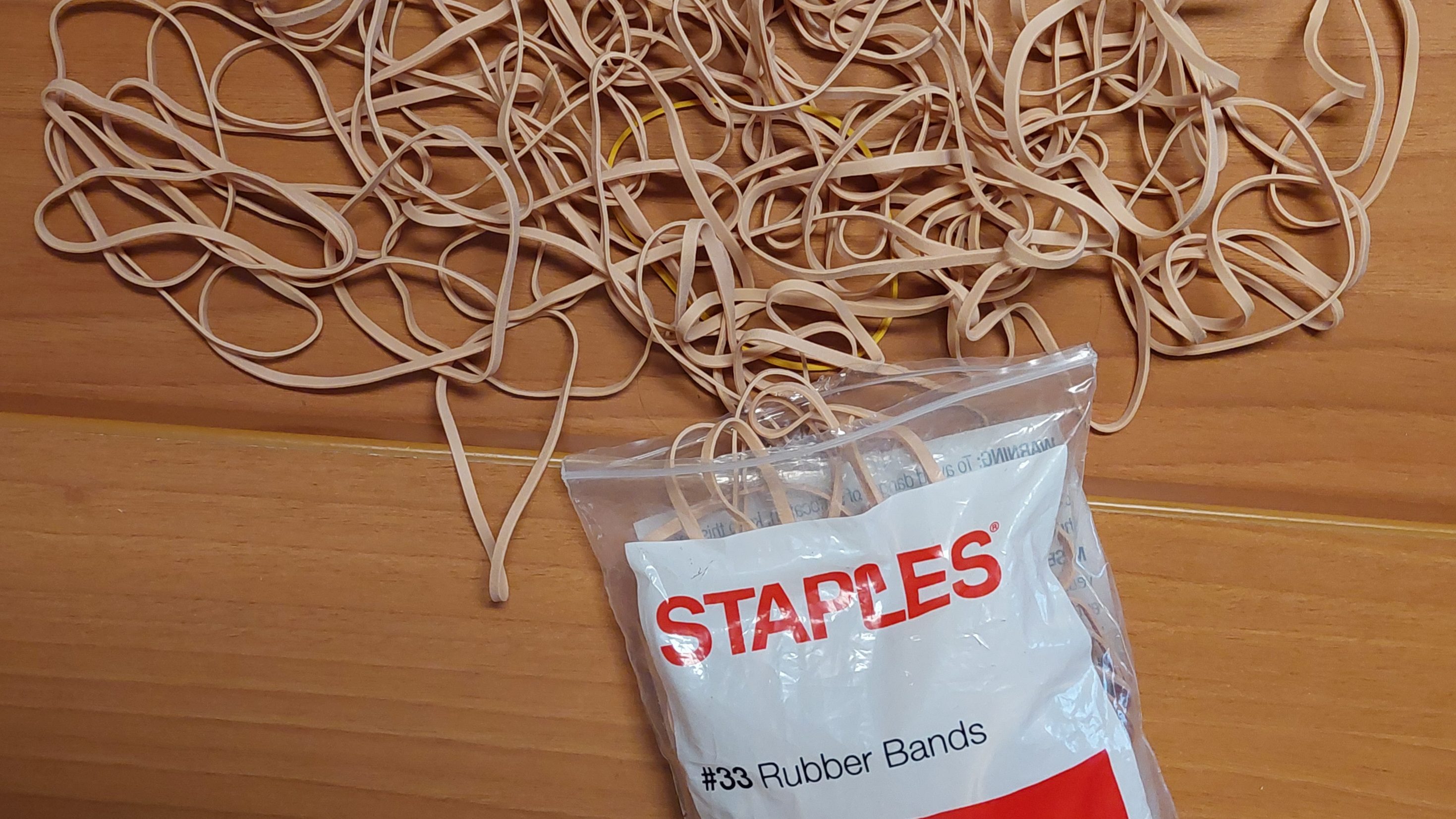
Rubber bands are one common product containing latex.
Photo credit: Nora Betts
By Mi-Ree Zwick
Concordia is trying to reduce the use of items containing latex in certain buildings on campus to accommodate a freshman student with a latex allergy.
Latex can be found in many items, such as bath mats, products with elastic, balloons and rubber bands. Between 1% and 6% of people have a latex allergy, according to the Allergy & Asthma Network.
“With every exposure [to latex], my reaction also gets worse,” said the student, who asked to remain anonymous. She added that during latex exposures she has difficulty breathing because her asthma reacts negatively to her latex intolerance.
“Even being in the room with balloons triggers an asthma attack for me,” she said, and added she has had four significant latex exposures since the beginning of the semester, all of them involving balloons.
The student contacted CUNE’s Disability Support Services, along with the Health Office, the Student Life Office, Chartwells Dining Services, and her professors, among others.
Matt Myers, director of the Academic Success Center and Disability Support Services on campus, said that the office’s responsibility is to help remove barriers for students. “Every disability can affect different people in different ways,” he said. “We meet with every student [who comes to us] and do our best to support them in a practical and appropriate way.”
Unlike in K-12 school systems, higher education students must identify themselves as having an allergy. The education system from elementary school to high school refers students who may have special needs.
The Thom Leadership and Education Center is one building trying to reduce the use of items that could cause a latex exposure.
Dr. Lorinda Sankey, who manages the Thom Leadership and Education Center building, collaborated with the head of security on options.
“It’s very extensive to make something completely latex free,” Sankey said. They worked to mitigate the risk of exposure to latex within common areas, specifically classrooms where the student has classes.
“We’re ensuring non-latex supplies are used in specific classrooms or suites,” said Sankey.
An email was sent to faculty and staff about reducing latex in buildings on campus. These steps, while not foolproof, help ensure that the staff and faculty are aware of the allergy. Sankey said that they are working toward reducing the usage of latex supplies across campus.
“I was not banking on that [latex removal] being a possibility,” the student said. “I was mostly just trying to get accommodations for if I ever need to leave the building [for a bad reaction].”
Another big concern is her dormitory life, not only for this semester, but for following years as a student. She said she plans to talk with SLO about those concerns. In the interim, she is working with her RA to spread the word and to ask that balloons not be used in the dorm if possible.
She said Chartwells told her that when balloons are in the cafeteria, she can pick up food from the Doghouse as an alternative.
She asked that students be considerate of other people and their needs because allergies and intolerances are things that are out of a person’s control.