

Influenza spreads on campus, impacts class attendance
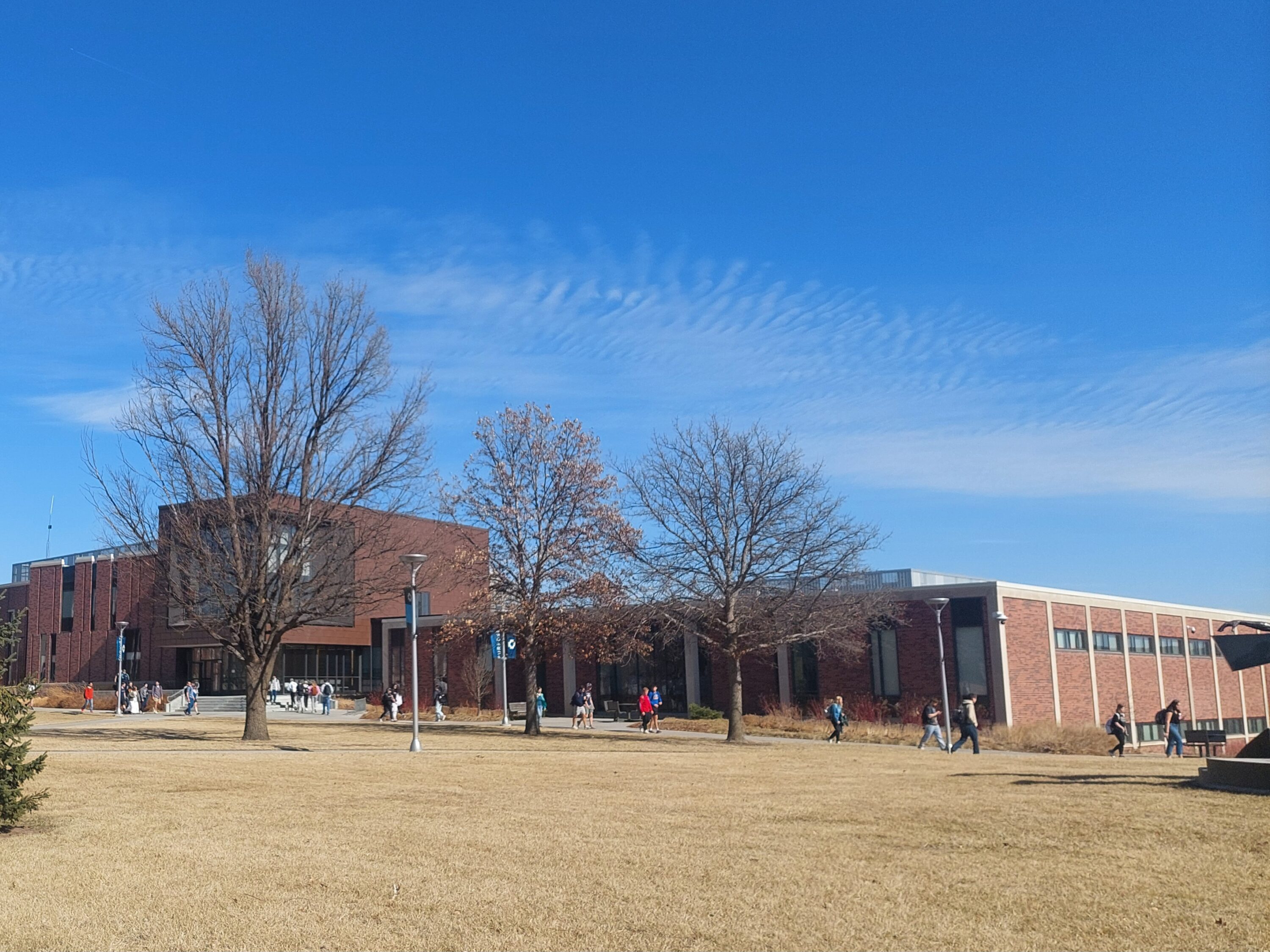
Students walk to class on Feb. 16.
Photo credit: Nora Betts
By Johann Nafzger
An especially bad flu season is sweeping through campus forcing students and teachers to adjust on the fly to varying symptoms and absences.
Concordia’s campus nurse Suzanne Briggs, who is a nurse practitioner, said there seems to be an increased length and reach for this year’s flu season. “I keep thinking that we’re gonna get better and better but we have not,” Briggs said.
She said influenza, COVID-19 and some strep is going around campus.
“They always say ‘flu season is going to be awful this year,’ and this seems to be the year that it actually is for us,” Briggs said and noted the number of students coming through the Health Center.
“I feel bad that we are busy every day and I haven’t been able to get students in,” she said, adding there have been a few days where they were fully booked and had to schedule students for the next day. She did encourage students to email the Health Center when sick.
Dean of the College of Arts and Sciences Dr. John Hink said that it “definitely seems like a worse year than other years,” when it comes to campus illness.
“It seems like, when people are missing class because of sickness, they’re missing class because of something a little more serious than ‘I’ve got a head cold,’” he said. He added that students seemed to be out for multiple days rather than just staying out for one day.
Theology professor Dr. Mark Meehl said that while this year “seems worse than previous years” the evidence is still anecdotal and lacks data to back it up.
Math professor Tim Schroeder said there are differences in absenteeism between upper- and lower-level classes. “In our discipline [mathematics], it’s probably generally [that] they come to class even if they don’t feel up to it,” Schroeder said, regarding his upper-level math class.
Schroeder said this semester he has “been fortunate” that even in his general education class, he had only 1 of 32 students absent due to sickness during a recent exam.
Meehl and Schroeder said they have felt little to no palpable difference in the atmosphere in classes, while Hink said the sickness was sometimes noticeable.
“There have been a couple of times where it just seemed like everyone was just sniffling or coughing and you could just see the germs spreading,” Hink said, adding that “for the most part the class dynamic hasn’t changed much, except for a couple of times … where things were quieter or class was a little more flat.”
Briggs said one reason sicknesses may be so widespread is population density. “Living in close quarters, it’s a hard thing to just stop in its tracks,” said Briggs. “There are some students that will go, no matter what, to class, and that makes it difficult too.”
Briggs said people have varying symptoms. “Some people have a couple days of fever and then they really feel pretty good, and there’s some that have a fever for five, six, even seven days,” she said.
Briggs had some advice for dealing with this season’s bugs.
“People that are very health conscious, and they’re good at their sleep, and they’re good at their hydration … get over it quicker,” Briggs said. “If you know you have a lot of sickness around you, [you could] add some zinc and even a probiotic.”