MLK Day speaker shares biblical connections to “I Have a Dream” speech
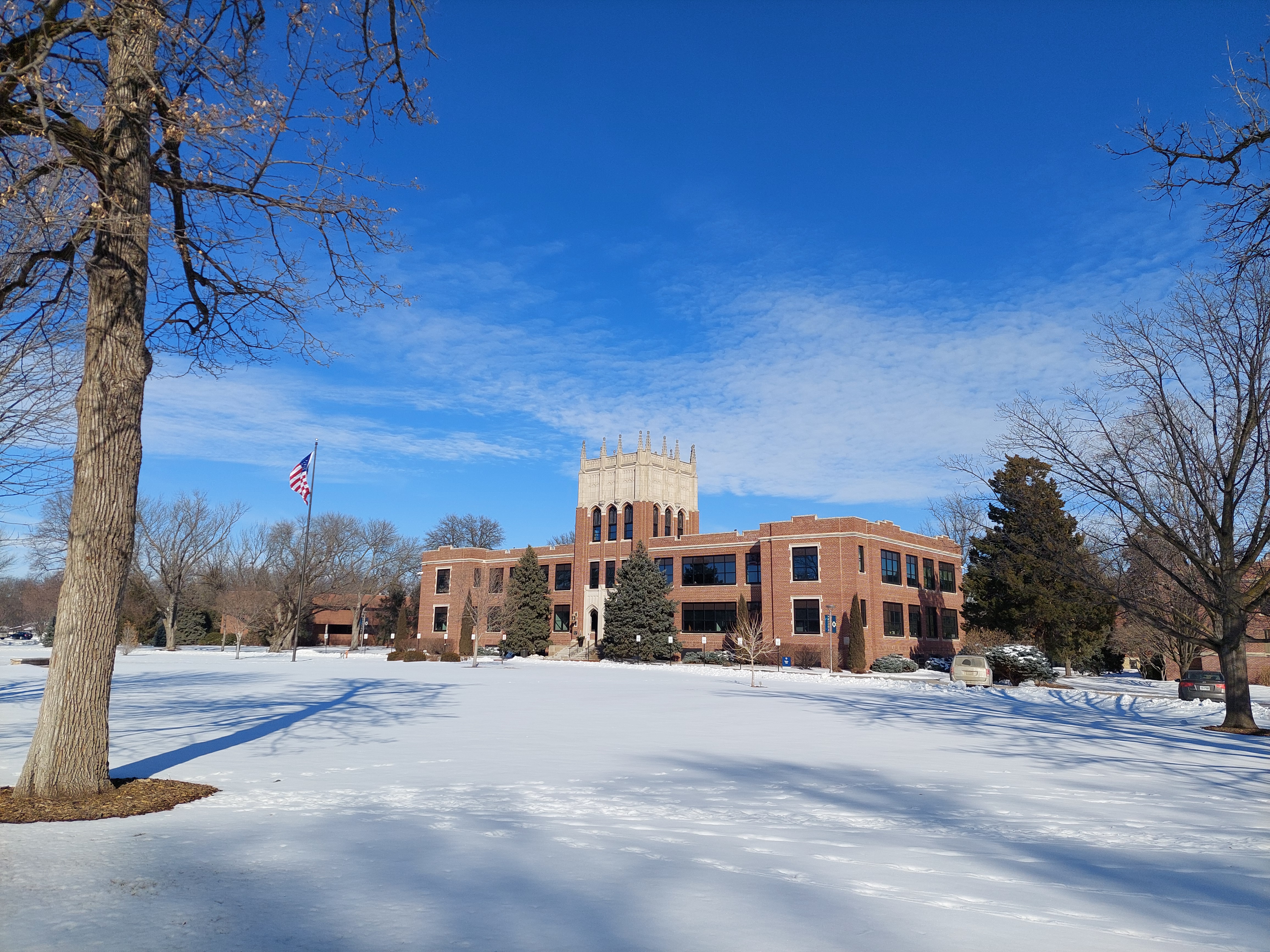
Weller Hall
Photo credit: Nora Betts
By Natalie Guske
Concordia alumnus Rev. Stephen Wiggins Sr. used his Martin Luther King Day address on Tuesday to tie the legacy of the late Civil Rights leader to that of one of the Old Testament’s great dreamers: Joseph.
Wiggins built upon the story of Joseph in Genesis 37, which was the foundational text of his sermon in Weller Chapel earlier in the day. He quoted parts of King’s famous “I Have a Dream Speech” to paint a picture of King’s dreams of a united nation, even in the face of those who “discredited [his] dreams as fantasy,” much like Joseph’s brothers did his.
Comparing King’s adversaries to Joseph’s brothers, who hated him for his dreams, Wiggins highlighted the hate and oppression that King faced at the hands of “those who wanted to dispose of the dreamer and the dream.”
He was quick to remind the audience, however, that despite the difficult situations that both Joseph and King faced, they still held fast to their dreams and that “God has a way of making the wildest dreams come true; of leveling hills and exalting valleys.”
Wiggins, a 1982 graduate of Concordia Teacher’s College, is the pastor at St. Paul Lutheran Church in Jacksonville, Florida. He also is president of The Lutheran Church–Missouri Synod Black Clergy Caucus.
Wiggins talked about the message of the grace of God, and how He works through the lives of His people, pointing out the cross and the “robe of eternal salvation given to use because of God’s unmerited favor and undeserved love in giving us His only begotten son, Jesus Christ.”
While Scripture and faith figured heavily in Wiggins’ address, so did his own experiences growing up as a Black child during the Civil Rights Movement of the 1960s. The son of an LCMS pastor and Lutheran school teacher, Wiggins attended all Black Lutheran schools until he came to Concordia to earn a degree in education, an experience he said “grew [him] from a spiritual boy into a spiritual man.”
Freshman Faith Rohloff said she liked that Wiggins talked about his own story in relation to the Civil Rights Movement.
“[It was eye-opening to hear] from someone who’s personally grown up in Alabama, [in a time] where there was racial inequality,” she said.
Wiggins also talked about current events in the United States and the LCMS, calling out the brutality of Immigration and Customs Enforcement agents against immigrants and minorities in Minnesota, and the struggles faced by those who provide Black ministry in the LCMS. He said that “churches and congregations are not exempt from racism” and that “no church can be what God intends it to be unless we become who God intends us to be.”
Junior David Marin said it was “cool how he [Wiggins] called people to action and wasn’t afraid to say the stuff that was wrong with the church [and with the world].”
Marin asked Wiggins about how to hear God’s calling, and he said he was inspired by how Wiggins recounted his experience in switching from being a second-grade teacher to an ordained pastor.
“I personally liked his answer to my question [as] he said how you have to have a personal relationship with God to be able to hear that, which I think is really important,” Marin said.
Wiggins’ address encompassed King’s legacy and God’s divine grace and callings for the lives of His people to reflect the love of Jesus, in their lives and in their dreams.
“I thought that his address was a good reminder [that there are] people of different cultures within the LCMS who [all] worship God and do it in ways that are equally valid,” sophomore Eunice Clausing said. “It was also a reminder that [those of us going] into the ministry need to learn to advocate for each other and not be lulled into passive roles when difficult situations arise.”